


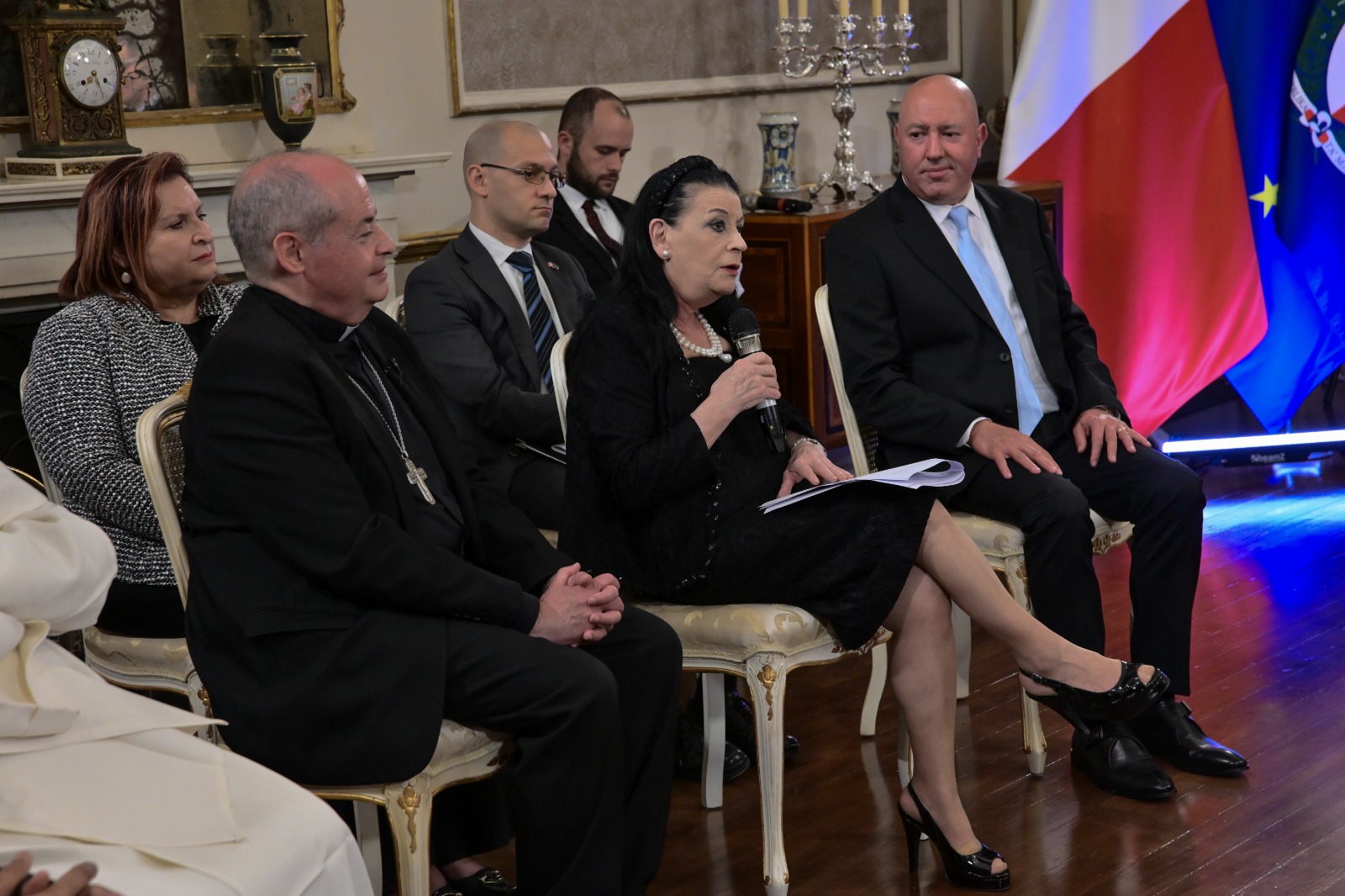
We gather this evening at a moment when the world around us often feels unsettled. Conflicts persist, and at times like this, I would say at all times, different religions should collectively serve as a tool for peace and harmony, rather than another source of division.
The major religions have similar underlying core principles, they share several ethical principles and precepts concerning peace, inclusivity, the inherent dignity of every human being.
Peace is not merely the absence of conflict, but it is a precondition for harmony, equality, social justice, and rights which during the last century were not merely enunciated by international instruments as the United Nations declaration of Human Rights, the European Convention on Human Rights of the Council of Europe, but have since been incorporated into supreme laws, namely the constitutions of various nations.
However there exists a divide between the enunciation of these rights, their insertion in legal documents, and their acceptance by people on the ground. Prejudice still lurks in the background, unobtrusive but surfacing whenever these enunciated principles are tangibly manifested, evidence of a reality of mindset which seeks to exclude rather than include skeletons, always ready to re-assume corporeal form.
Humankind has moved away from the concept of Holy Wars, the historical reality of holy wars, and the imposition of faith—religions should be vigilant, so they do not become tools for divisions in the hands of forces having agendas of domination.
Malta is rooted in a rich Christian heritage, deeply woven into our history and identity. At the same time, our society continues to evolve. Today, it is home to people of many faiths, as well as to those who profess none. This diversity is not incidental, it is part of this involvement of our society brought about by various factors.
And it calls on us to ensure that every individual feels seen, respected, and valued.
This evening’s gathering carries a clear and meaningful purpose. Each voice, equal in dignity and expression, contributes to a shared message: a commitment to dialogue, to peace, and to genuine care for “the other.”
As leaders, as communities, and as citizens, this commitment calls on each of us to consider our responsibility towards one another, and towards the society we are shaping together.
But who is “the other”? The “other” is not distant or abstract. It is the person who feels unheard, the migrant seeking belonging, the neighbour whose beliefs differ from our own, or the individual who does not identify with any faith. In recognising the “other,” we affirm a truth that lies at the heart of all our traditions, the inherent dignity of every human being.
As President of Malta, I firmly believe that our institutions must remain open and inclusive, safeguarding not only freedom of belief, but also fostering opportunities for encounter and understanding. When we come together in this spirit, we strengthen the very fabric of our societies.
This interfaith gathering, held alongside the International Religion and Society Conference and centered on the theme “Who Cares? Society, Religions, and the Concern for the Other,” invites us to reflect on a simple yet profound question: Who cares?
To the question “Who cares?”, may our answer be clear and resolute: We care. We care for those like us, and for those who are different. For the majority, and for the minority. For the believer, and for the one who does not believe.
Diversity, when embraced with sincerity and respect, is not a challenge to overcome, but a strength to cherish.
May this gathering reaffirm our shared resolve: to reject indifference, to resist division, and to ensure that faith is a force for peace, compassion, and the common good.