


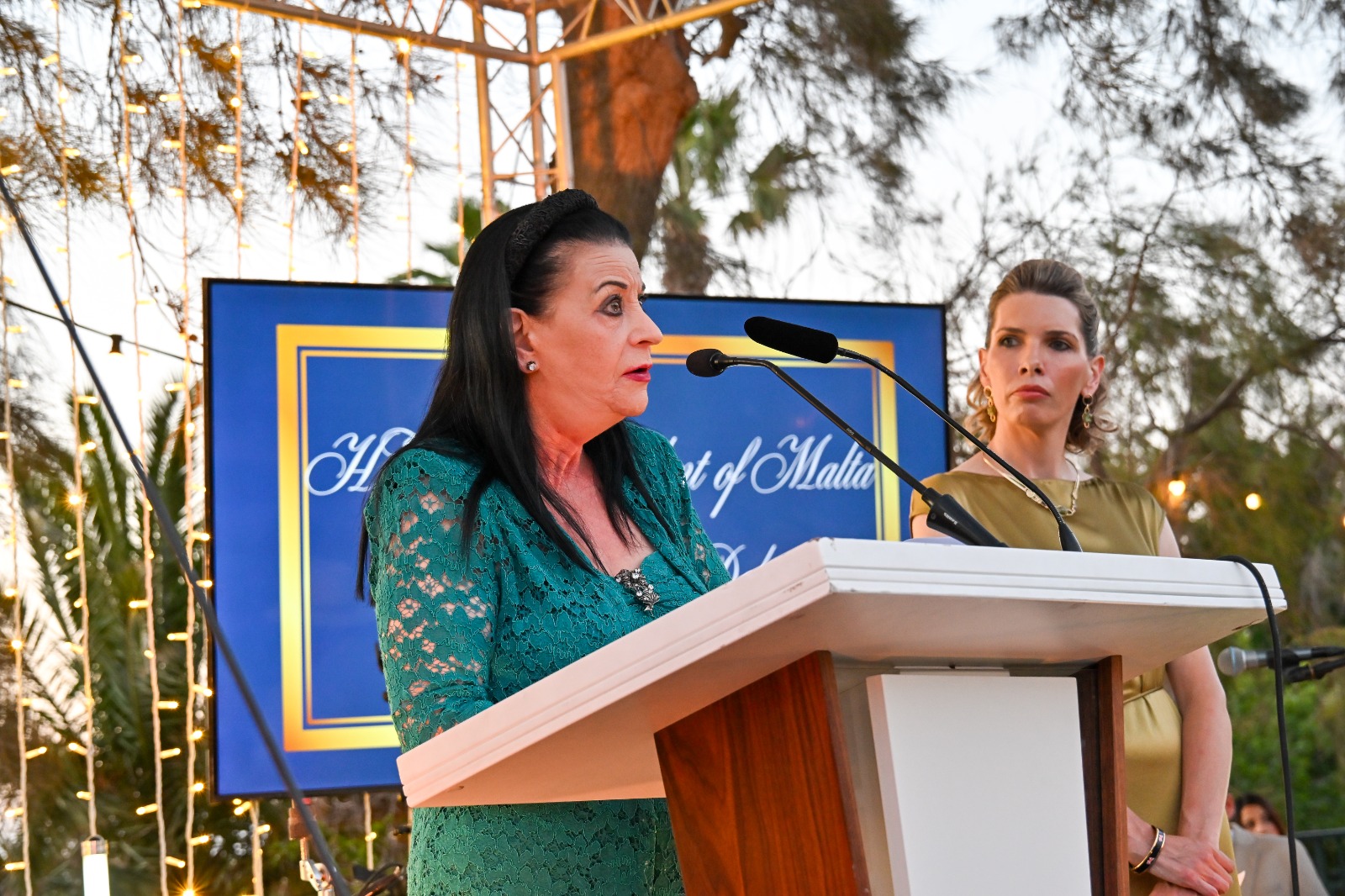
We are gathered this evening to mark the official birthday of His Majesty King Charles the Third. Tonight’s celebration is also an opportunity to reaffirm the enduring ties between Malta and the United Kingdom and our commitment to continue strengthening our friendship.
Following our independence in 1964, formal diplomatic ties between Malta and the United Kingdom were immediately established, ensuring that the bond between us remained strong. This marked a key point where the deep historic ties shaped by decades of British rule transformed into a mutually beneficial partnership between states – equal partners on the international stage.
Several bilateral agreements have been signed since then, further deepening our relationship. Many high-level visits have taken place over the years, underlining the desire on both sides to continue cooperating across a wide range of sectors.
Today, the UK remains a key commercial partner for Malta, a relationship underpinned by strong trade of goods, services, and investment links. Bilateral investment flows remain active, with UK firms operating in Malta and vice-versa.
We are keen and determined to continue building on these achievements. We will continue to encourage all measures aimed at enhancing business ties with the UK and supporting those initiatives that can increase interaction between our respective commercial stakeholders.
In particular, we see potential to explore and develop new avenues of collaboration in the fields of financial services, fintech, advanced manufacturing, digital innovation, renewable energy, and hospitality.
These areas were also reflected in the recent TradeMalta business mission to the United Kingdom between 25 and 29 May, which included visits to Cardiff, Wrexham, and Liverpool, and brought together Malta-based businesses with UK stakeholders through targeted meetings and high-level networking opportunities.
Moreover, Malta’s location at the heart of the Mediterranean with an English-speaking workforce, position Malta as an ideal EU-based gateway for UK businesses seeking to strengthen trade links between Europe and Africa.
The sizeable Maltese diaspora in the UK serves as a living link between our peoples and stands as a testament to the natural affinity that exists between our nations. Equally, Malta is home to a significant number of British citizens and continues to be a popular tourist destination for British travellers.
The high level of connectivity between our countries remains undoubtedly a key factor in sustaining these ties, and we are committed to preserve and enhance them.
To this end, we also welcome our engagement in the cultural sector, cultivated via institutional collaborations and creative mobility programs. Prime examples include Malta’s participation at the London Design Biennale last year, and the participation of two UK artists at the Malta Arts Biennale 2026.
Beyond bilateral cooperation, collaboration in multilateral institutions such as the Commonwealth serves as an important institutional framework, not only for closer ties between Malta and the UK, but also for our sustained efforts on the world stage.
The Commonwealth Strategic Plan for the period 2025-2030, which was endorsed by member states last September, sets out a clear and practical vision of how the work of the organisation can lead to impact. The Plan seeks to bring together three pillars: democratic, economic, and environmental resilience, which are further underpinned by core values including youth empowerment, gender equality, and support for small and vulnerable states.
In 2016, Malta and the Commonwealth launched the Commonwealth Small States Centre of Excellence, a Malta-based flagship centre dedicated to boosting support to small states. Since then, the Centre has successfully spearheaded scholarship opportunities, capacity-building and knowledge-sharing initiatives focussed on Small Island Developing States (SIDS). It has also developed the Climate Vulnerability and Resilience Index to assess the impact of climate change on small island states, an area that remains central to Malta’s foreign policy.
Malta has also been serving as the chair of the Commonwealth Ministerial Action Group (CMAG) since 2022, where we remain fully committed to upholding democratic principles, human rights, the rule of law, and fundamental freedoms across all 56 countries of the Commonwealth.
We are currently chairing, through our High Commissioner in London, the Executive Committee of the Commonwealth Foundation, and from July we will also be chairing the Commonwealth Secretariat’s Board of Governors.
Next year, Malta shall be hosting the Commonwealth Youth Games, bringing together young athletes from across the Commonwealth.
We stand ready to continue investing in this organisation, and this also as part of our firm belief that all platforms that promote dialogue among nations must be protected and reinforced. The international scenario demands all this and more.
In Europe, Russia’s aggression against Ukraine continues to have grave repercussions on the civilian population of Ukraine and peace and security across the European continent.
The escalating tensions and military operations across the Middle East, now stretching from Gaza to the Gulf, threatening to undermine hard-won progress which fostered a measure of fragile stability. Recent developments have underscored this precarious stability, deepening mistrust among the region’s populations.
Diplomacy, dialogue, and de-escalation must remain at the forefront of international efforts, as they provide the only pathway toward lasting peace in the region.
Aside from conventional wars, the challenges we are contending with cannot be addressed by countries acting in isolation. In this context of complex and intertwined challenges, the United Nations needs to continue to serve as the beating heart of our multilateral system, but this necessitates conscious and concerted efforts by all nations upholding dialogue and international law and diplomacy as the basis of world peace and a just international order.
Contemporary challenges such as climate change require collective action if we are to devise comprehensive, sustainable, and lasting solutions that consider the diverse circumstances of countries, particularly small islands and coastal communities.
The advent of Artificial Intelligence has underscored the need for clear principles and robust frameworks to guard against misuse and unintended consequences. While these technological breakthroughs create new opportunities, facilitating tasks and the flow of information, we must ensure that human oversight remains central.
At the same time, we must work together to ensure that the digital divide between developed and developing countries does not further deepen, possibly exacerbating existing inequalities.
Ladies and gentlemen
On this occasion, I would also like to highlight a cause that although not part of the Presidential constitutional remit, is nevertheless an important pillar of the Presidency: the Malta Community Chest Fund. I eagerly look forward to my yearly visit to the United Kingdom to meet with Maltese patients who are receiving treatment in the United Kingdom.
In this regard, I have to express my appreciation of the cooperation and support accorded by the UK Government under the UK-Malta Bilateral Health Agreement.
I once again extend my thanks to High Commissioner Busby for hosting us this evening. Malta looks ahead with confidence and optimism as we continue strengthening the bonds between our nations. May the friendship between Malta and the United Kingdom continue to flourish for generations to come.
On behalf of the people of Malta, I raise a toast to the continued well-being of His Majesty King Charles the Third, and to the enduring friendship between our nations and our peoples.