


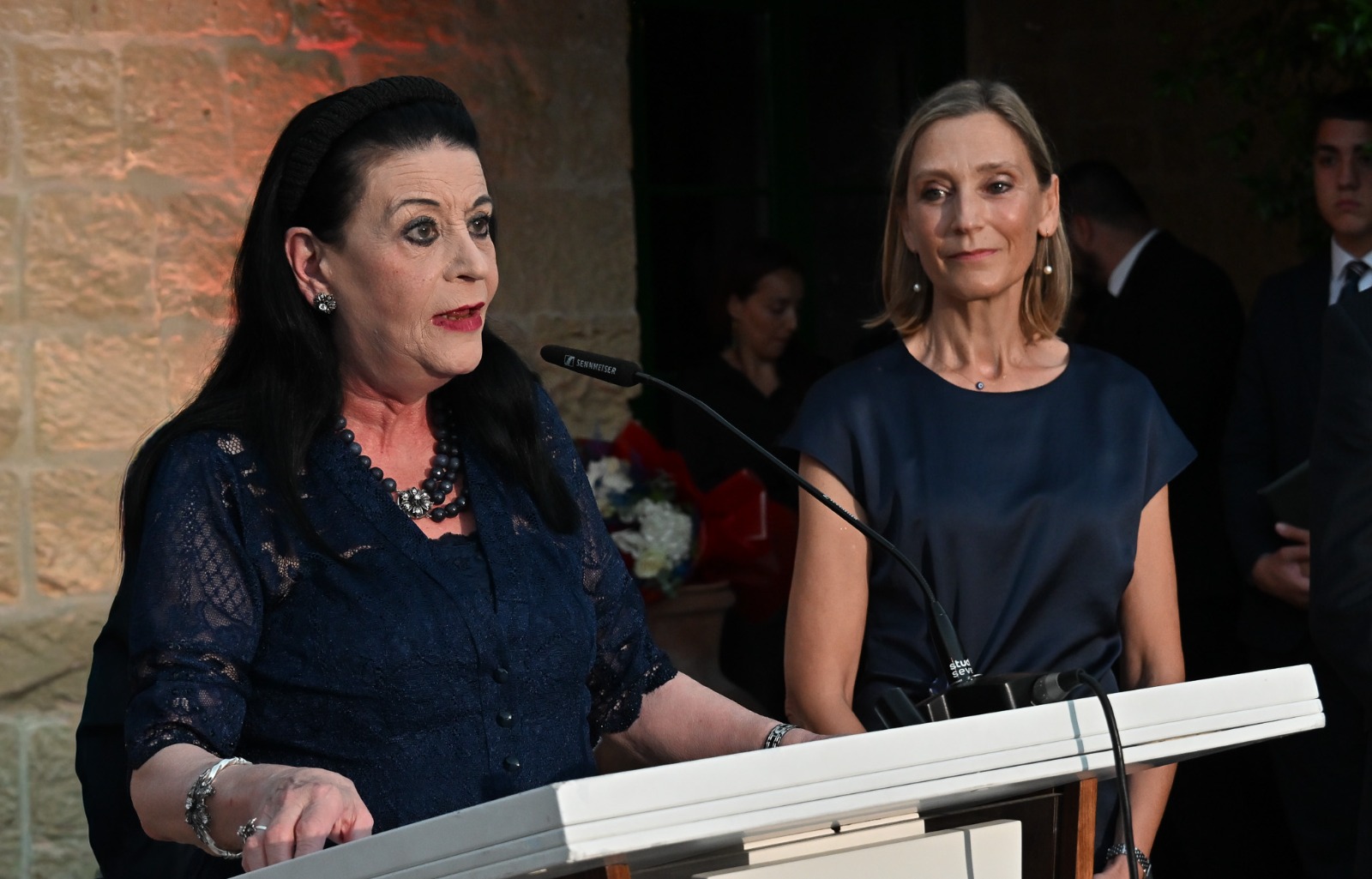
We gather here today to commemorate Bastille Day, the national day of the French Republic. The democratic values of liberty, equality, and fraternity associated with the French Revolution constitute lasting socio-political ideals that transcend space and time, and they have acquired sharper significance in the present international scenario.
These ideals are at the root of present-day notions of democracy, the rule of law, the still ongoing evolvement of human rights, while the notion of fraternity may be said to have its present-day equivalent in what is in political jargon termed civil society.
These values also nurtured the seeds of self-determination in those of our forefathers whose mindset was not tainted by servility to overlords.
Hence, although formal diplomatic relations between Malta and France only commenced in 1964 with Malta’s independence, there are deep historical, political, philosophical, and legal ties that date back centuries between our two countries.
Trade between Malta and France is significant. We remain committed to building on these achievements, encouraging measures and initiatives aimed at promoting interaction between our respective commercial stakeholders.
To this end, retaining and improving the current level of connectivity between Malta and France is of fundamental importance. Regular direct flights are crucial in continuing to further bilateral exchanges at all levels.
The dynamic cultural bonds between our countries continue to flourish, spanning heritage, language, artistic exchanges, higher education, research, and local community links. They are an integral part of our relationship and an area that has potential for further growth.
In this regard, I commend the invaluable work of the Alliance Française de Malte in promoting French culture in Malta since 1959, playing an instrumental role in enabling Maltese learners to discover the beauty of the French language and its rich literary heritage.
In parallel, Malta also serves as a hub for French students who are interested in learning or improving their English. Last year, almost 8,000 French students visited our shores for this purpose.
France’s participation in the Malta Arts Biennale 2026 with the exhibition titled ‘Facing the Challenge’ is not only evidence of cultural exchanges between Malta and France; but, themed to highlight climate change it manifested that culture has a part to play in sharpening awareness of the challenges facing humanity and the globe’s very existence.
This at a time when Europe is witnessing first-hand the impact of climate change as heatwaves sweep across the continent. Determined and concerted efforts are urgently needed if we are to tackle this global phenomenon.
Malta thanks France for its leadership in advancing the international climate agenda, most notably through the signing of the Paris Agreement at the UN Climate Change Conference, COP21, on 12 December 2015.
It is imperative for the good of all that countries with more clout than others on the international stage take leadership roles in moving forward the agenda of present-day challenges facing the world’s citizens.
Climate change is also likely to contribute to increased migration pressures.
Migration is another key issue that must be addressed through the strengthening of the external dimension, partnerships with third countries, and more effective policies generally, including confrontation of migration’s problems at source.
As two Mediterranean countries, Malta and France are deeply committed to stability and prosperity in our region. There is frequent exchange on matters that directly impact the Mediterranean region, both at the bilateral level, as well as through regional forums such as the Union for the Mediterranean, the MED9, the 5+5 Western Mediterranean Dialogue, and the Parliamentary Assembly of the Mediterranean.
It is important that multi-sectoral cooperation with other Mediterranean partners is enhanced, including through frameworks such as the Pact for the Mediterranean and the Union for the Mediterranean; this not only in the current context but as an ongoing vigilant cooperative process seeing that the Mediterranean region, especially its southern and eastern flanks are historically prone to flare-ups.
The situation in Gaza remains of grave concern. We have to persevere in promoting a credible political horizon centred on a negotiated two-State solution.
Initiatives such as the Global Alliance for the Implementation of the two-State solution, in which Malta has been actively participating, remain important for achieving a sustainable solution to the Israeli-Palestinian conflict.
France’s leadership within the Global Alliance, where France together with the Kingdom of Saudi Arabia co-chaired the High-Level Conference in July and September 2025, played a pivotal role in mobilising international support and fostering dialogue among regional and international stakeholders.
This Conference led to the recognition of the State of Palestine by Malta and France, and other countries.
To the east, the recent resumption of hostilities in Iran and across the Gulf served as a stark reminder of the fragility of the situation. We once again stress the need for a lasting settlement between the conflicting parties, one that can provide regional stability and guarantee freedom of navigation and safe transit through the Strait of Hormuz.
Regarding participation in the various EU for a, we must remain ever true to the principles of the founding fathers, ever vigilant to the fact that competitivity as far as commerce is concerned is itself an extension of security for European citizens.
The free movement of people and goods has to be safeguarded and improved at all times in line with changing international circumstances.
This is increasingly important in a geopolitical landscape where human actions continue to undermine global stability. Various situations around the world are putting international law and the global economy under excessive strain.
Maintaining open trade, resilient supply chains, and a well-functioning single market is essential.
The security of our Union and our continent are paramount. Malta will continue to support strengthening Europe’s resilience, especially in the areas of maritime security, infrastructure protection, and crisis preparedness, while always being guided by our constitutional neutrality.
To this end, we support maintaining the current momentum on the enlargement process, an investment in long-term peace and security, while ensuring that the process remains credible and merit-based.
The situation in Ukraine remains deeply worrying. Malta’s solidarity with Ukraine has been unwavering from the beginning of Russia’s aggression, a commitment reflected in our various international roles, including the signature of the International Claims Commission through Malta’s initiative during our Presidency of the Council of Europe last year.
This was an important step toward delivering redress and accountability for victims of this war.
Countries like France and Malta have been consistent in speaking up on all these issues, both in their national capacity and within European and international fora.
We must safeguard what has been so painstakingly achieved these last 80 years. The UN Charter enshrines values which are perennial for humanity’s good.
We must not shirk from the very heavy task of trying to make the UN better equipped to face the globe’s present-day challenges, knowing and aware that this includes taking into account the emphasis of different messages which emerge from time to time from different quarters.
Ladies and gentlemen
I once again extend my thanks to Ambassador Lelong-Motta for hosting us this evening. Malta will continue to place the strengthening of relations with France among its foremost priorities in the years to come.
On behalf of the people of Malta, may I now invite you to join me in a toast to the continued well-being of His Excellency President Emmanuel Macron, and to the enduring friendship between our nations and our peoples.