


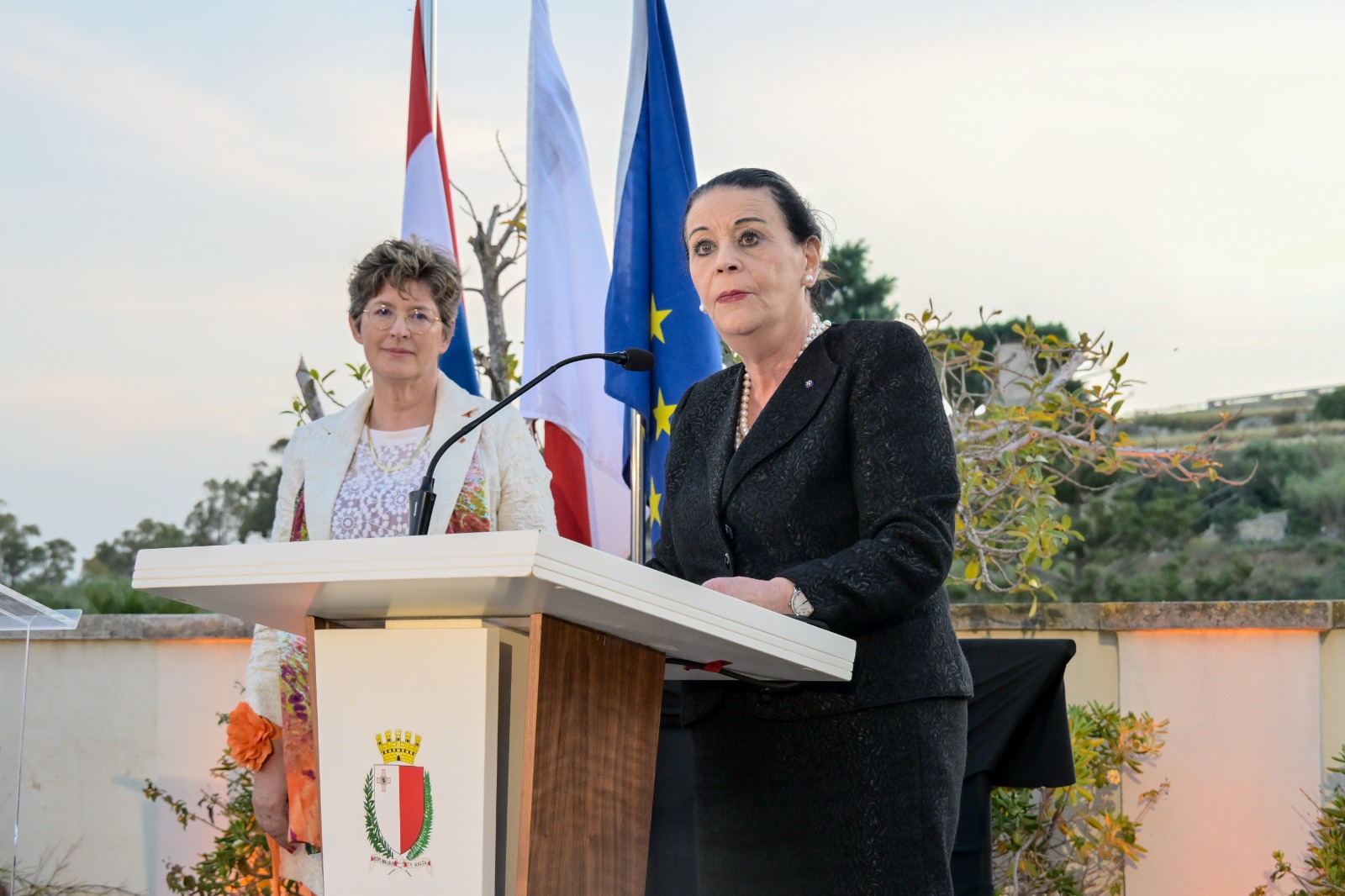
We meet here today to mark the National Day of the Kingdom of the Netherlands. Last October, Malta and the Netherlands celebrated 60 years of diplomatic ties. Six decades during which our two countries have signed a wide array of bilateral agreements and collaborated in diverse sectors such as agriculture, education, blue economy, and tourism.
Tonight’s event serves to reaffirm the close relationship that exists between our two nations. Our bond is anchored in trust, common interests and aspirations, further reinforced by our shared European values.
Trade statistics clearly illustrate the strength of our relationship, with a steady flow of goods and services. This solid foundation allows us to continue building on what we have achieved so far, to be more ambitious, and to explore new avenues of cooperation, particularly in the fields of pharmaceuticals, ICT, digital services, and professional services.
At the same time, frequent direct flights have been instrumental in developing and sustaining tourism between our countries and facilitating interactions among commercial stakeholders, and between our peoples.
Preserving, and if possible, improving this level of connectivity is paramount. Direct links increase people-to-people contacts, allowing our citizens to easily access the beauty and rich cultural heritage that our two countries have to offer.
Malta remains eager and committed to taking further concrete steps that serve to bring our citizens and business communities closer to each other.
It is also heartening to see various exchanges and initiatives in the cultural sector, with Maltese artists exhibiting their work in the Netherlands, and vice versa. This year’s edition of the Malta Biennale is featuring two Dutch participants. I firmly believe that art and culture play a unique part in bringing people of different backgrounds together, serving as a powerful reminder of our shared humanity.
Student exchanges through programmes such as Erasmus+ are equally important. They complement and enrich academic learning, opening new horizons for our youth as they explore different ways of life, and in turn, widening perspectives and encouraging the development of innovative ideas.
Ladies and gentlemen
Malta and the Netherlands are both unwavering in their commitment to peace, international cooperation, free trade, and human rights. These shared values translate into a similar vision on the international stage, with our respective foreign policies closely aligned on many important issues.
The current international situation is of profound concern to us.
The various active conflicts and fragile truces in different parts of the world continue to put the international system under immense strain, with grave repercussions on their regions and beyond.
Russia’s aggression against Ukraine has been generating insecurity and instability on our continent for several years. Apart from being a grave violation of international law, this conflict is having a devastating impact on the Ukrainian population.
In the Middle East, we continue observing deeply concerning developments. Across the Gulf, civilians are suffering the effects of heightened tensions and military confrontation, which are causing broader regional and global repercussions, particularly for the shipping and energy sectors.
Simultaneously, in Lebanon, the latest wave of hostilities has resulted in a dire humanitarian situation, defined primarily by the mass displacement of more than one million people.
Dialogue, de-escalation, and diplomacy remain the only viable pathways to move forward and achieve lasting stability in the region.
Diplomatic solutions and confidence-building measures are desperately needed to draw us back from the precipice. To this end, the international community must spare no effort to preserve and nurture the spaces that make such engagement possible.
We should all pause to reflect on the dire and lasting consequences of unrestrained conflict and take stock of its impact on civilian lives across the globe.
International humanitarian law, a framework which exists to protect human dignity, must be safeguarded. Its erosion is not only detrimental to civilians and vulnerable groups trapped in the midst of war, but it represents a profound moral failing, reinforcing the perception that the strong can trample upon the weak with impunity.
It is therefore imperative that we safeguard the multilateral system with the United Nations at its core. Despite its shortcomings –which we can and should collectively address in the appropriate forums – there is no alternative to the UN if our objective is to ensure that all states are treated equally, with dignity and respect.
The normalisation and trivialisation of war and threats of force cannot be the basis of relations among states.
Countries like Malta and the Netherlands must continue to serve as strong advocates of the values enshrined in the UN Charter, with strong and clear messages in favour of the peaceful resolution of conflicts. Allowing our global system to collapse would only lead to further distrust among nations, resulting in conflict situations, intensifying human suffering.
Ladies and gentlemen
I extend my thanks to Ambassador Adimi-Koekkoek for hosting us this evening. Malta looks ahead with optimism to continue strengthening the bonds between our two countries.
We are determined to continue building on these achievements, and look forward to continue our close cooperation with the Netherlands within the European Union structures, the United Nations, and other international fora.
On behalf of the people of Malta, I raise a toast to the continued well-being of His Majesty Willem-Alexander, King of the Kingdom of the Netherlands, and to the enduring friendship between our nations and our peoples.